The Indian Express
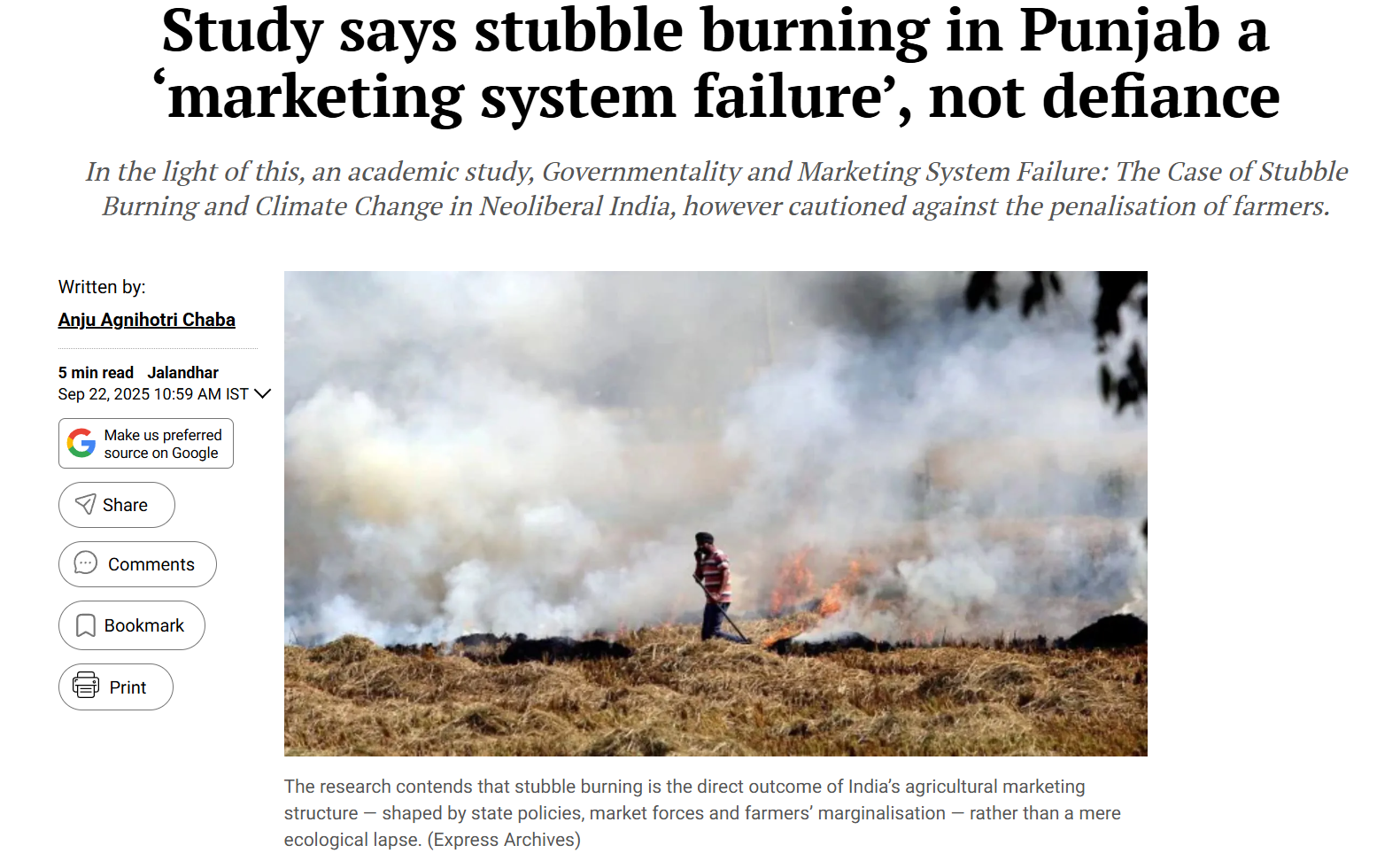
Study says stubble burning in Punjab a ‘marketing system failure’, not defiance
Anju Agnihotri Chaba · 22 September 2025
Macromarketing · Critical theory · India
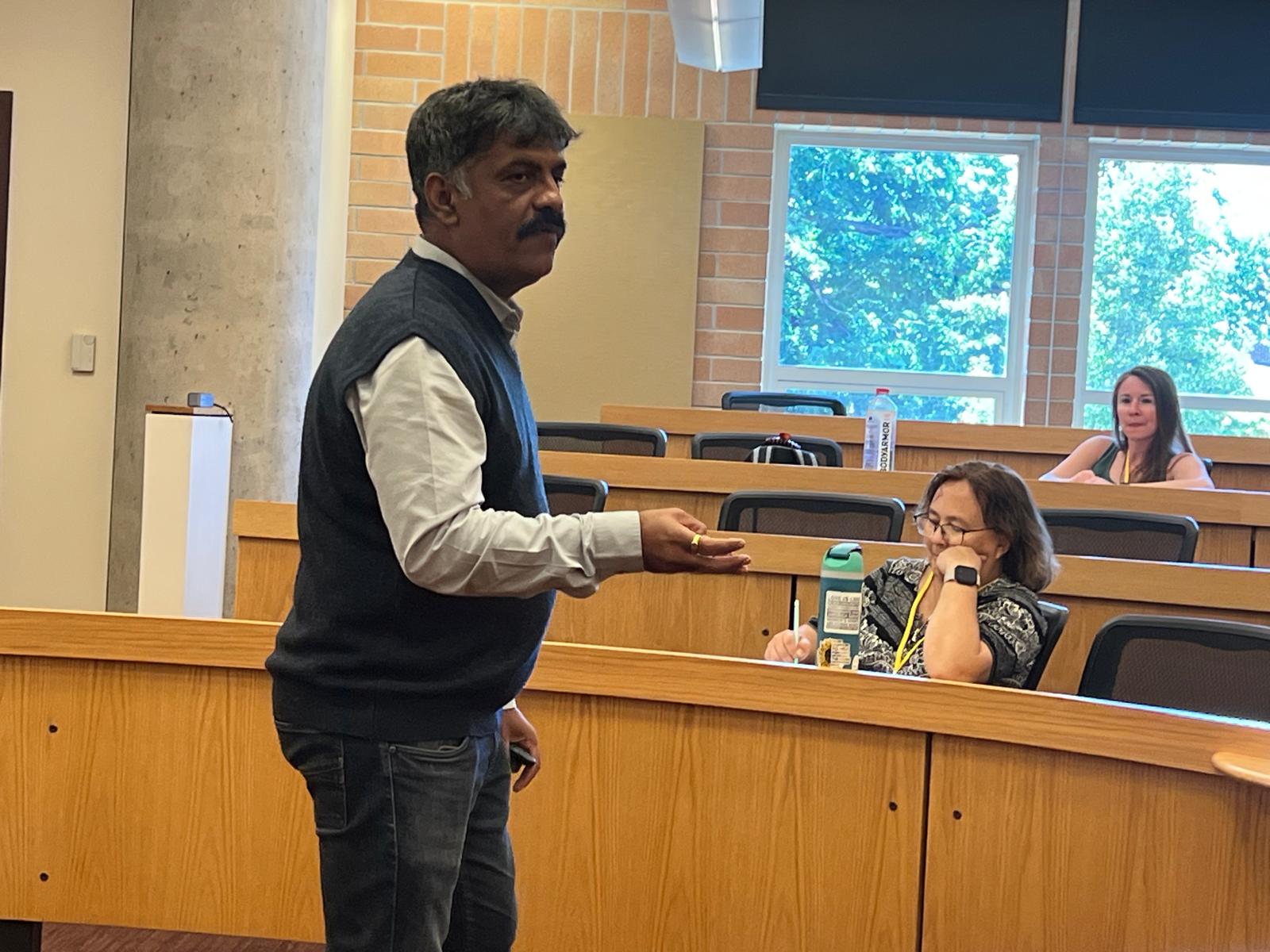
Dr. Sujit R. Jagadale
Reading markets as moral systems — and reimagining them as systems of dignity and justice.
The thesis
“A market is never a neutral instrument. It is a moral and political system — one that can dignify people, or erase them.”
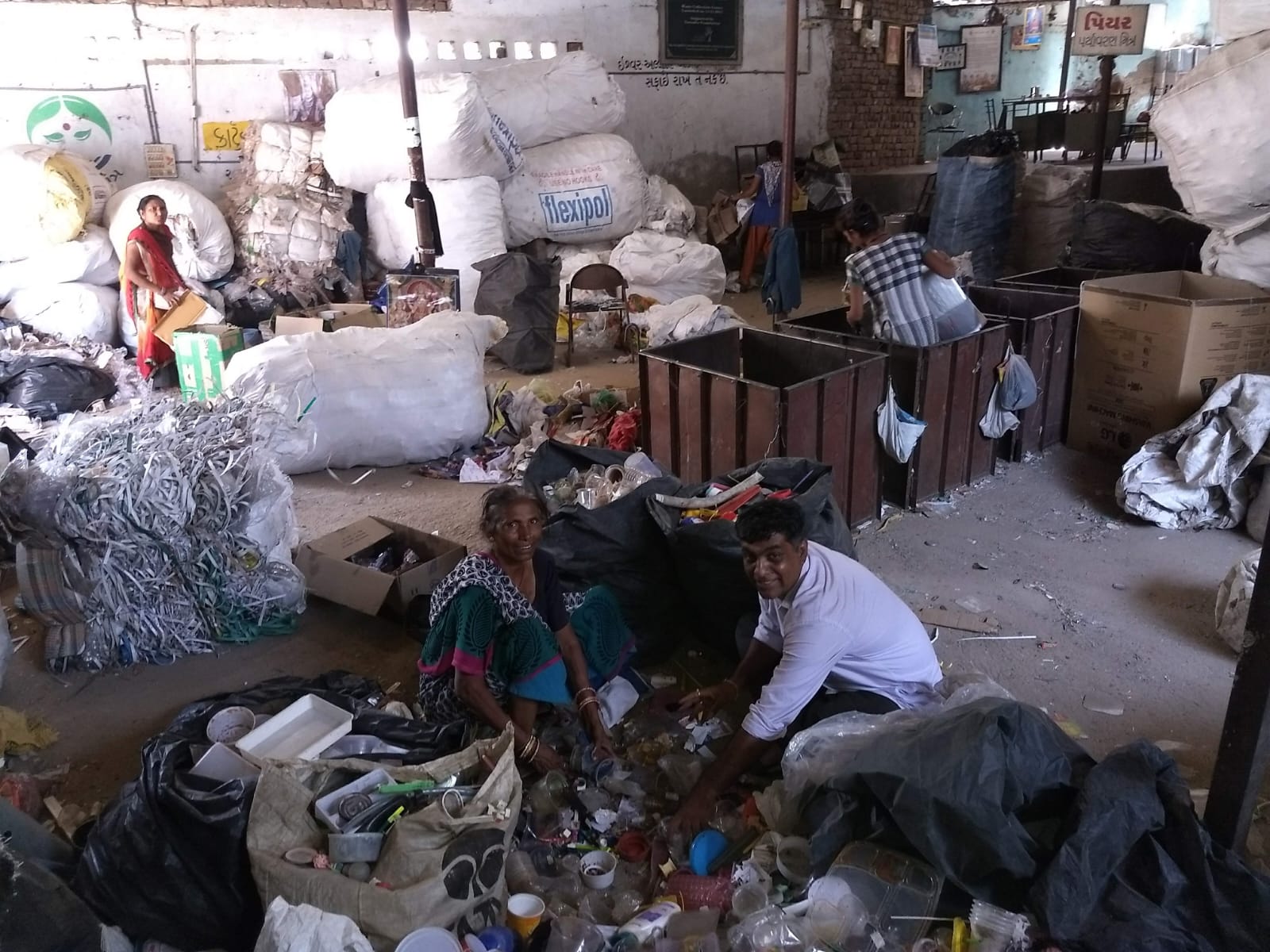
Mainstream marketing presents itself as a neutral, managerial craft. Jagadale’s work refuses that comfort. He reads markets as moral systems — structures that distribute dignity as unevenly as they distribute wealth.
His field is where those systems press hardest — subsistence marketplaces, surrogate mothers, rag-pickers, the unheard. Not to document their poverty, but to ask how markets might be rebuilt to honour them.
What drives the work
Most marketing scholarship asks how to sell more. Sujit Jagadale asks a different question entirely: what does a market do to the people inside it? For him, a market is never a neutral machine for matching supply with demand. It is a moral and political system — one that hands out dignity as unevenly as it hands out goods.
That conviction is the thread running through two decades of work. It sends him not to the boardroom but to the margins: to surrogate mothers, rag-pickers, subsistence consumers, farmers burning stubble because the system leaves them no better option. He goes there not to catalogue poverty, but to understand the systems that produce it — and to insist that they could be built otherwise.
His method is unusual for the discipline. Where others reach for a spreadsheet, he goes to the market itself — sitting with the people an exchange touches, and treating their dignity as the first question rather than the last. The result is scholarship that is rigorous in its evidence and unmistakable in its conscience.
If there is a single value beneath it all, it is this: that the measure of a market is not its efficiency, but how it treats the least powerful person within it.
Explore
The four ideas the work stands on — and the philosophical vocabulary behind them.
EnterA decade of research read phase by phase, from well-being to national policy.
EnterThe educator, the fieldworker, and the man beyond the academy.
EnterHonours & recognition
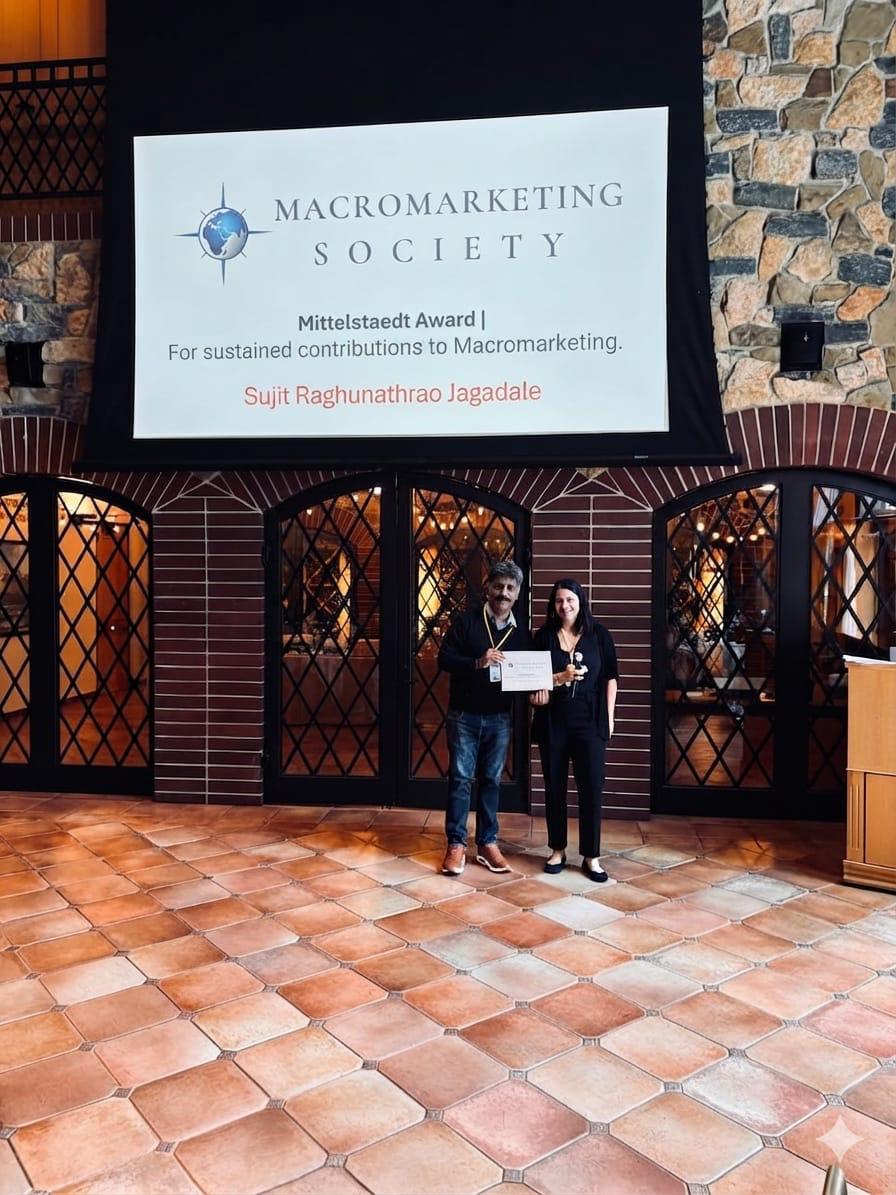
The Macromarketing Society
“For sustained contributions to macromarketing.”
The Society's recognition of a body of work built, paper by paper, at the intersection of critical theory and the marketplace.
Also
Policy Board Member
The Macromarketing Society
In the press
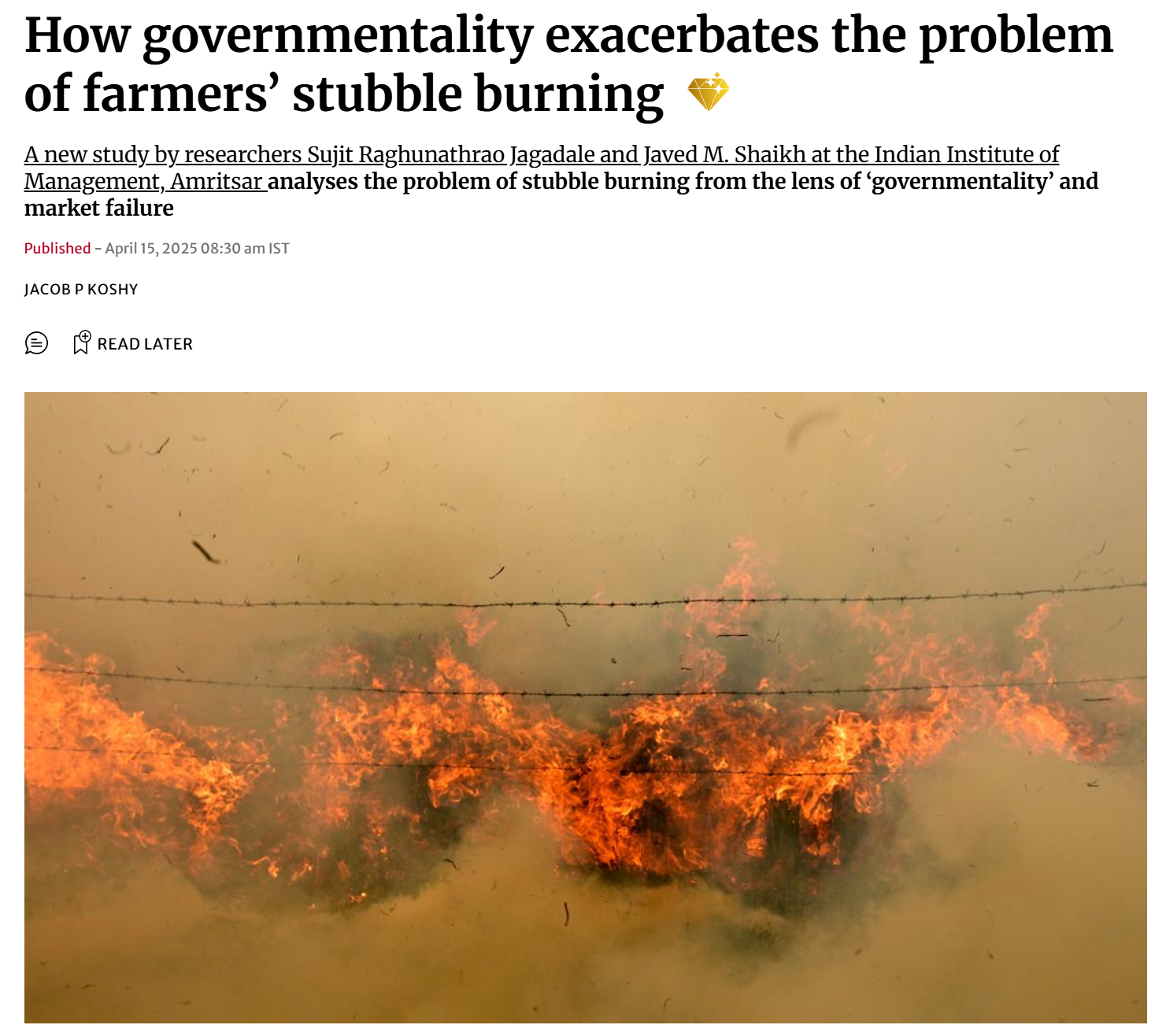
In “Governmentality and Marketing System Failure: The Case of Stubble Burning and Climate Change in Neoliberal India” (Journal of Macromarketing, 2025), Jagadale — with Javed M. Shaikh — reframes one of North India’s most intractable environmental crises. Every winter the region’s stubble smoke chokes its cities and deepens a mounting climate burden; public debate blames farmer defiance. Jagadale reads it instead as a marketing-system failure. He shows how neoliberal agricultural policy — the Minimum Support Price regime, the mono-cropping it rewards, and the narrow harvest windows that follow — quietly “conducts the conduct” of farmers until burning becomes rational survival rather than a choice. Treating a climate and air-quality emergency as individual wrongdoing, he argues, misses its structural roots: distorted incentives misalign every actor in the system. His conclusion reverses the usual prescription — penalising farmers treats a symptom, while the cure lies in redesigning the system that traps them. The argument carried into The Hindu and The Indian Express.
Contact
An open door to fellow scholars, journalists, and students whose work touches markets, marginality, and the ethics of exchange.