The person
The temperament behind the work.
It is difficult to spend a decade studying dignity without it shaping the person doing the studying. The temperament that runs through Sujit Jagadale's research — patient, attentive, unwilling to look away from discomfort — is the same one that shows up in the room, in the field, and on a mountain trail.

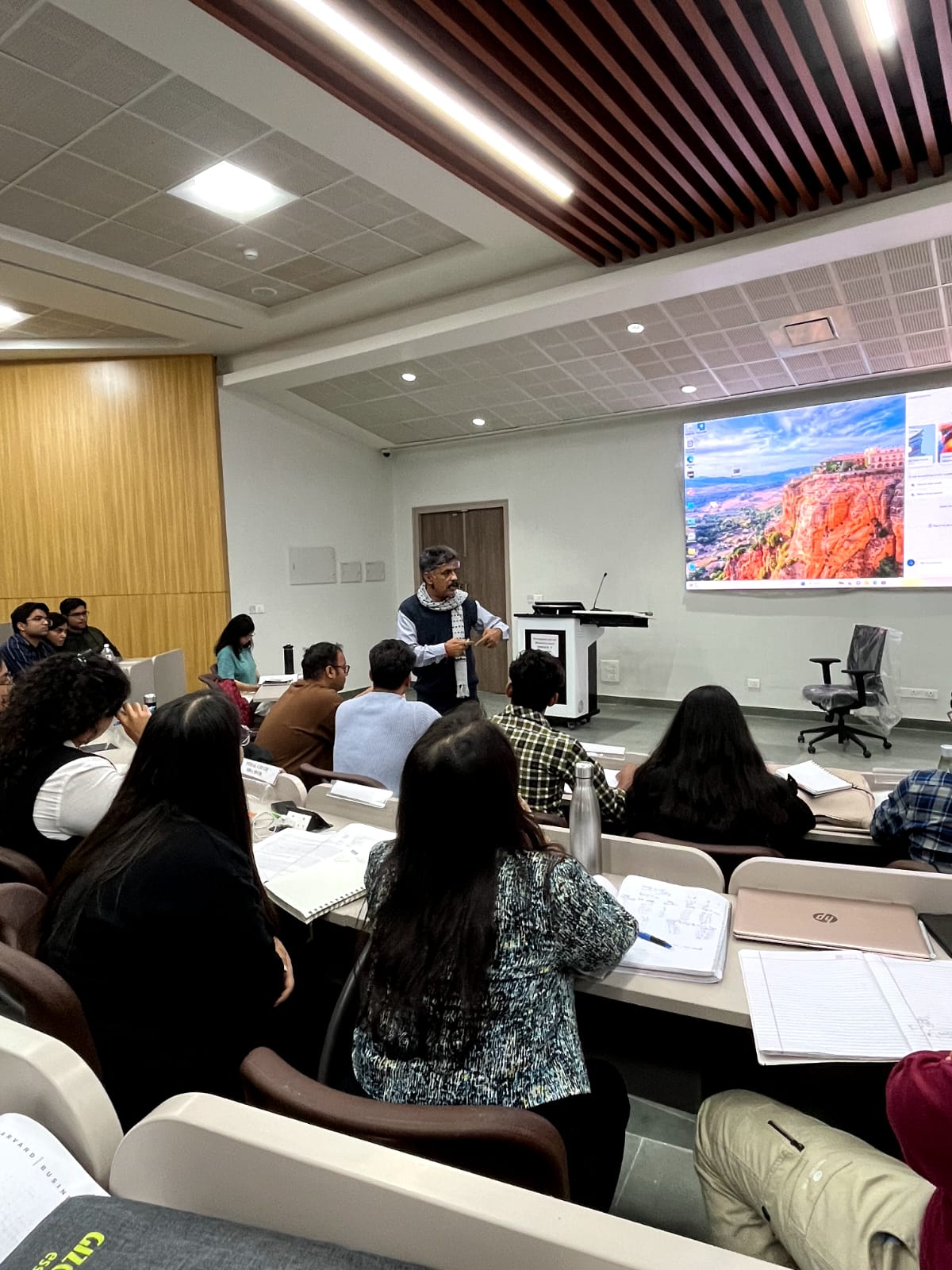
The educator
He embodies a rare breed of intellectual: one who approaches standard paradigms to challenge rather than validate them. His theoretical work openly asserts that marketing cannot be separated from its ethical implications, translating this ethos into practice by pushing audiences to examine not just the efficacy of a strategy, but its broader societal impact.
Ultimately, his legacy isn't defined by providing neat conclusions, but by his rare ability to guide minds through dense uncertainty until clarity emerges.
The fieldworker's temperament
Much of his research could not be done from a desk. It requires sitting on the floor of a waste-segregation centre, earning the trust of women the market prefers to ignore, and listening for as long as it takes. That work rewards a specific set of virtues — humility, patience, and a refusal to reduce people to data — and these are the qualities his collaborators return to when they describe him.
Compassion, in his hands, is not sentiment. It is a research discipline: the deliberate practice of taking the other person's world as seriously as one's own.
Beyond the academy
Away from the argument, the same attentiveness turns outward — often toward the mountains. There is a symmetry to it: the researcher who studies systems from the inside is also drawn to the long, deliberate perspective a high trail offers, where the view only comes to those willing to climb for it.
The scholarship is serious. The person, by every account, is not solemn — quick to curiosity, slow to judgement, and more interested in the next good question than the last good answer.
The clearest portrait of the man is still the work itself.